There’s a moment you start to notice something subtle.
You say less, but people pay closer attention.
You step back but decisions still move in the same direction.
That’s when it becomes clear that influence isn’t tied to how visible you are. It’s tied to how consistently you show up.
At a certain point, leadership stops being about directing action and starts shaping how others think. That shift is where positive influencing becomes real as something people carry with them when you’re not there.
Positive Influencing Begins With Consistency, Not Intensity
There’s a tendency to associate influence with energy, how strongly something is communicated, how clearly it’s delivered.
But what I’ve seen hold over time is something quieter.
People don’t rely on isolated moments to understand your leadership. They rely on what remains consistent.
It shows up in how steady things feel when situations shift, in whether direction holds when pressure builds, and in how predictable your standards are over time.
That’s where influence starts to take shape, through what people come to expect from you, not in isolated standout moments.
Leadership and Influence: What Actually Sticks
When I think about leadership and influence, I don’t think about persuasion or presence. I think about what remains after the conversation ends.
People walk away with an impression of:
- What matters most
- What’s expected of them
- How decisions should be made
If those impressions are clear, teams move with more confidence. If they’re not, people fill in the gaps and that’s where inconsistency starts to build.
I’ve found that influence becomes stronger when repetition isn’t necessary, because your standards are already understood.
How Can You Be a Positive Influence to Others Without Forcing It?
Influence is often treated as something you project outward. Over time, it tends to form in quieter ways, through how people experience working around you.
A few things I’ve seen make a real difference:
Be clear without over-explaining
People don’t need more information they need direction they can act on. The more precise you are, the less friction they carry.
Leave space for ownership
Influence grows when people feel trusted to think, not just execute. If everything runs through you, nothing really scales.
Be intentional with where you step in and where you don’t
Not every situation needs your involvement. Knowing when to stay out of it can be just as important as knowing when to engage.
These shifts change how people operate around you.
Leadership Influence Is Carried in the Small Moments
The moments that shape influence often show up in how you handle things that don’t seem urgent but quietly define the environment around you.
I’ve seen influence build in moments like:
How you allocate attention
What you consistently choose to focus on becomes a signal.
How you handle silence in a room
When no one speaks, people are watching to see whether you fill the space, redirect it, or let it hold.
How you set pace without announcing it
Teams naturally adjust to the rhythm you operate at. Whether things feel rushed, steady, or unclear often traces back to you.
How you close conversations
What you reinforce at the end of a discussion tends to stay with people longer than the conversation itself.
Over time, these moments define how people think, where they focus, and how they operate without needing direction.
Influence and Persuasion in Leadership: Where They Diverge
There’s a practical distinction between influence and persuasion that becomes more visible over time.
Persuasion is immediate. It helps move a decision forward in the moment.
Influence builds gradually. It reduces the need to revisit the same conversations.
When influence is strong:
- Decisions require less explanation
- Alignment happens faster
- Teams move with less resistance
That doesn’t eliminate the need for communication but it changes the dynamic.
You spend less time convincing, and more time moving forward.
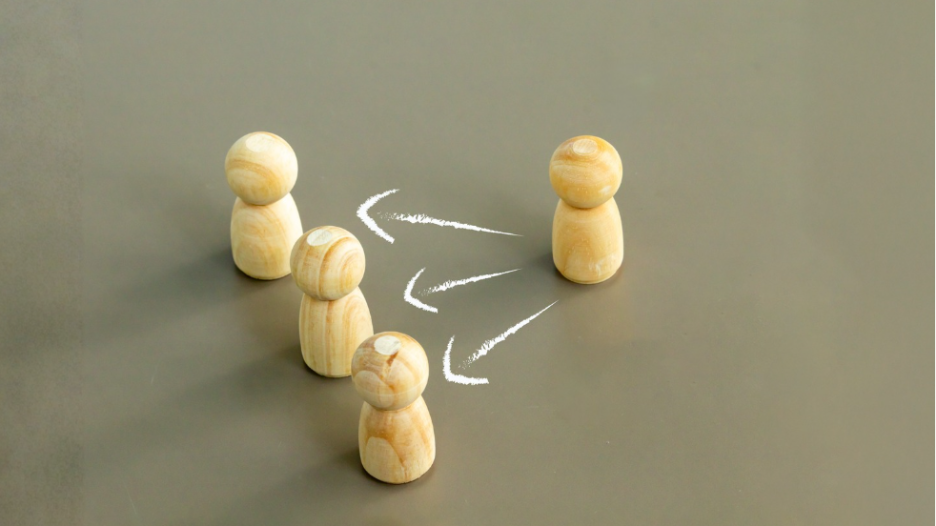
A Shift I’m Seeing: Influence in More Self-Directed Teams
One of the more interesting shifts I’ve seen is how teams are evolving.
There’s less reliance on constant direction and more expectation around autonomy.
That changes how influence works.
It becomes less about oversight and more about clarity that scales.
Leaders who adapt to this tend to:
- Simplify communication rather than expand it
- Reinforce a few key standards consistently
- Trust the process they’ve built.
The result is a team that doesn’t just execute but thinks.
And that’s a different level of influence.
If you’ve reflected on what leadership really means in practice, this idea connects closely to how I’ve broken down clarity, responsibility, and consistency in this piece on defining leadership
Practical Ways to Strengthen Positive Influencing
If you’re looking to strengthen your influence, the adjustments are often more subtle than expected:
Clarify expectations before performance becomes an issue
Direction early reduces correction later.
Pay attention to what your behavior reinforces
Standards aren’t defined by intention, they’re defined by repetition.
Stay aligned when it would be easier not to
Pressure tends to expose inconsistencies quickly.
These aren’t dramatic shifts. But over time, they shape how others think, decide, and act.
Closing Thought
If you’re working on becoming a positive influence as a leader, it doesn’t happen all at once. It builds quietly.
If you want a more structured way to think about how influence develops over time, that’s exactly what I built into Leadership Orbit. It’s designed to help leaders operate with clarity and consistency in a way that shapes how others think, act, and make decisions, well beyond direct oversight.
At a certain point, influence shows up less in what you say and more in what continues after you’ve said it.


